Asia · China
Dunhuang
敦煌
A Time Capsule of Silk Road Civilisation
Dunhuang is the most successful small city in China at converting civilisational depth into genuine travel value. The 492 caves of the Mogao Grottoes contain the world's largest collection of Buddhist art — murals, sculptures and manuscripts spanning fourteen centuries. The cave complex was sealed and forgotten for nearly 900 years, rediscovered in 1900, and is now a UNESCO World Heritage Site of the first order.
Standard tourist access covers around a dozen caves. Special cave access — the Class B and Class A restricted caves — requires advance booking through official licensed channels, sometimes months ahead. These caves contain the finest work: Tang dynasty murals of extraordinary sophistication, and spaces that have been closed to the public for decades. For travelers who understand what they are looking at, this is one of the most moving experiences available anywhere in China.
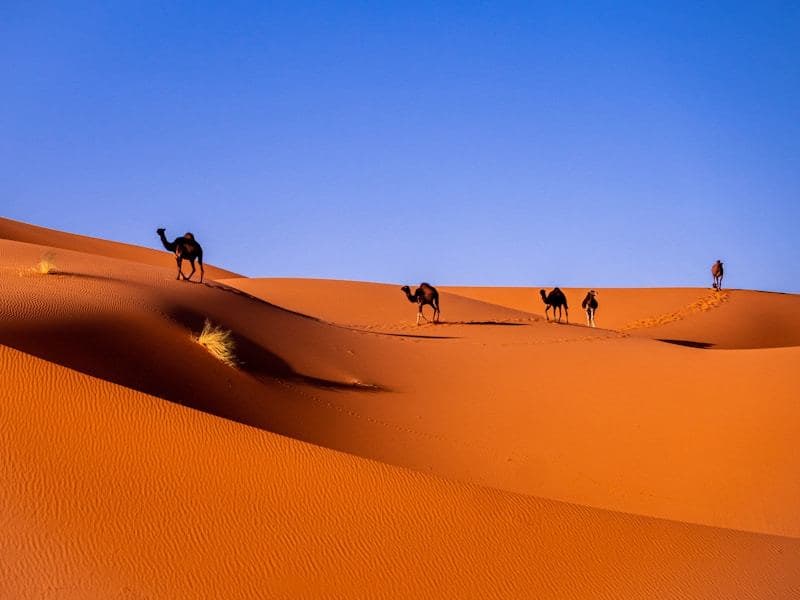
The Mingsha Sand Dunes at sunset, the Han Dynasty Great Wall ruins dissolving into the desert, the Crescent Moon Spring — Dunhuang layers its rewards. Fly in from Xi'an or Lanzhou, stay three nights minimum, and go slowly.
Plan With OttOLux
Want to experience Dunhuang for real?
Our editors know the access, the timing, and the operators worth trusting. Tell us what you have in mind and we'll help you shape the trip.
Contact UsTravel Info
Best Months
Apr · May · Sep · Oct
Difficulty
Moderate
Visa
Visa-free / Visa on arrival
No special permit required · Mogao Special Caves require advance booking (months ahead through official channels) · Fly from Xi'an, Lanzhou or Jiayuguan
Must Experience
- —Mogao Special Caves private access (advance booking essential)
- —Mingsha Sand Dunes at sunset by private camel circuit
- —Han Dynasty Great Wall ruins — 2,000-year-old rammed earth beacon towers
- —Crescent Moon Spring — an oasis that has never dried in recorded history
- —Dunhuang Museum — Silk Road manuscripts and artefacts
Travel Partners
Before You Go
Flights and hotels, rail, data, transfers, tours and cover — the services we use ourselves


Contains partner links · prices unchanged